Water Heater Installation and Repair in Waldorf, MD
Water Heater Installation and Repair in Waldorf, Maryland, with the published national price range up front, the problem confirmed on site, and a written figure before any work begins.
Water Heater Installation and Repair in Waldorf, MD by Waldorf Plumbing Company
The shower that starts warm and fades to lukewarm halfway through is a water heater filing its notice. Tanks rarely quit without rehearsing it first: recovery gets slower, the water runs rusty for a second in the morning, a rumble rolls through the tank when it fires. Waldorf Plumbing Company installs and replaces tank water heaters and repairs the ones worth repairing, and the first job on any visit is telling you honestly which of those two your tank needs.
Most Waldorf homes run a 40 or 50 gallon tank in a garage, utility closet, or basement corner, and most of those tanks went in between the 1990s and the 2010s. That means a large share of the town's water heaters are in the last stretch of their working lives right now, and the difference between a planned replacement and a leaking emergency is usually one honest conversation had early.
Repair or Replace: Reading a Tired Tank
A water heater is two things wearing one jacket: a steel tank that holds water, and a set of serviceable parts that heat it. The parts fail on a schedule and are worth replacing. The tank itself fails once, permanently, and no part fixes it. Sorting one from the other is the whole diagnosis.
Repairable failures have signatures. Hot water that runs out fast but still arrives points to a burned-out element or a failing thermostat in an electric unit, or a weak burner or thermocouple in a gas one. Water that is suddenly scalding or barely warm is usually controls, not the tank. Sediment popping and rumbling means the bottom of the tank is insulated with mineral scale, which overheats the steel and shortens the tank's life, but a flush and an anode rod check can still buy real time on a sound unit.
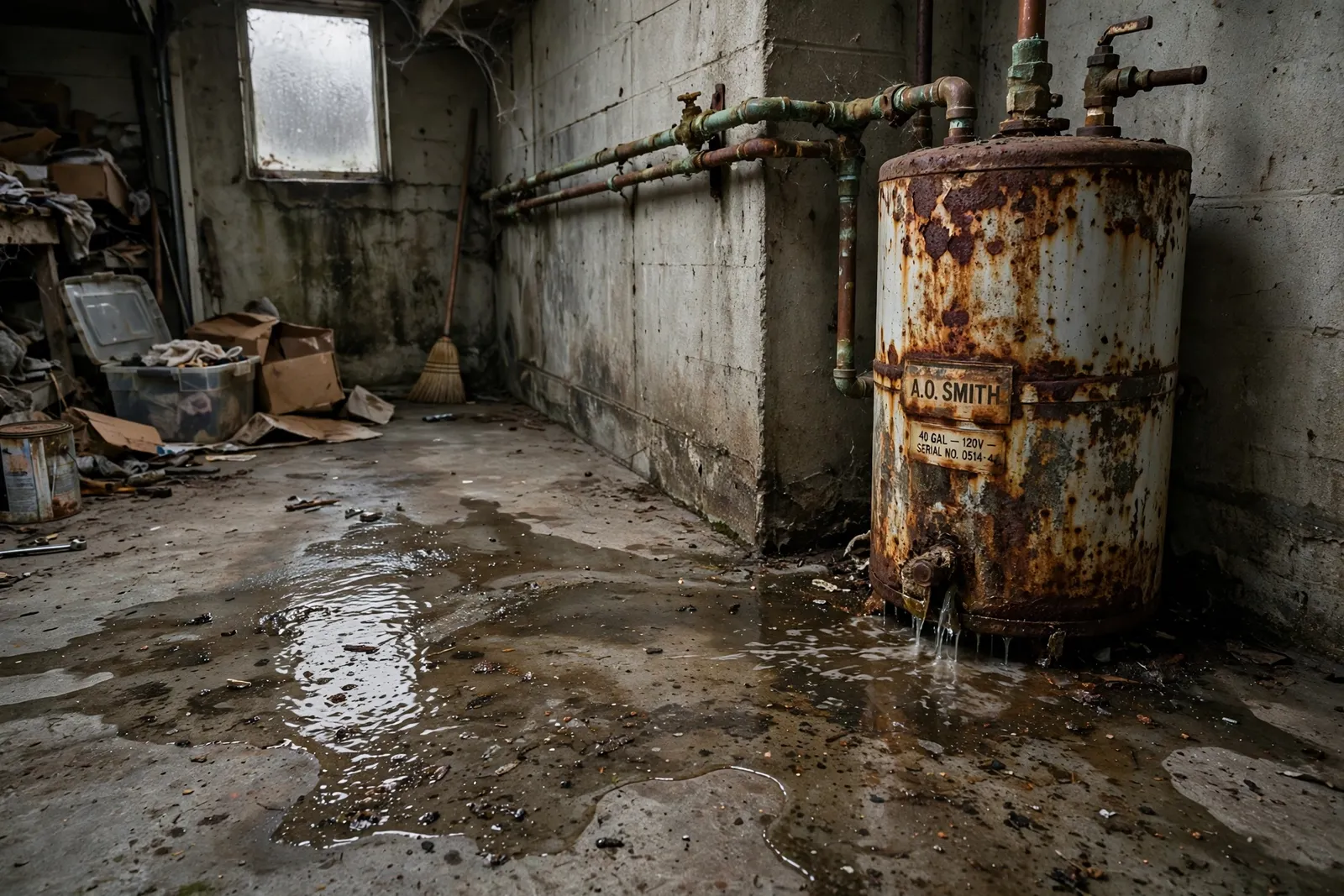
Replacement failures are just as plain. Rust at the base seam, water weeping from the tank body rather than a fitting, rusty water that never clears, or a tank past ten years old with any two symptoms at once. Money spent on parts for a tank in that condition is money that does not come back, and we will say so before we sell you an element.
How a Replacement Goes In
A standard tank swap follows a set order. The old unit is shut down and drained, which takes longer than people expect because a full tank holds its water like it means it. Once drained, the unit is disconnected and hauled out, and the space gets a look it has not had in a decade: shutoff valve condition, venting on a gas unit, the floor or pan underneath.
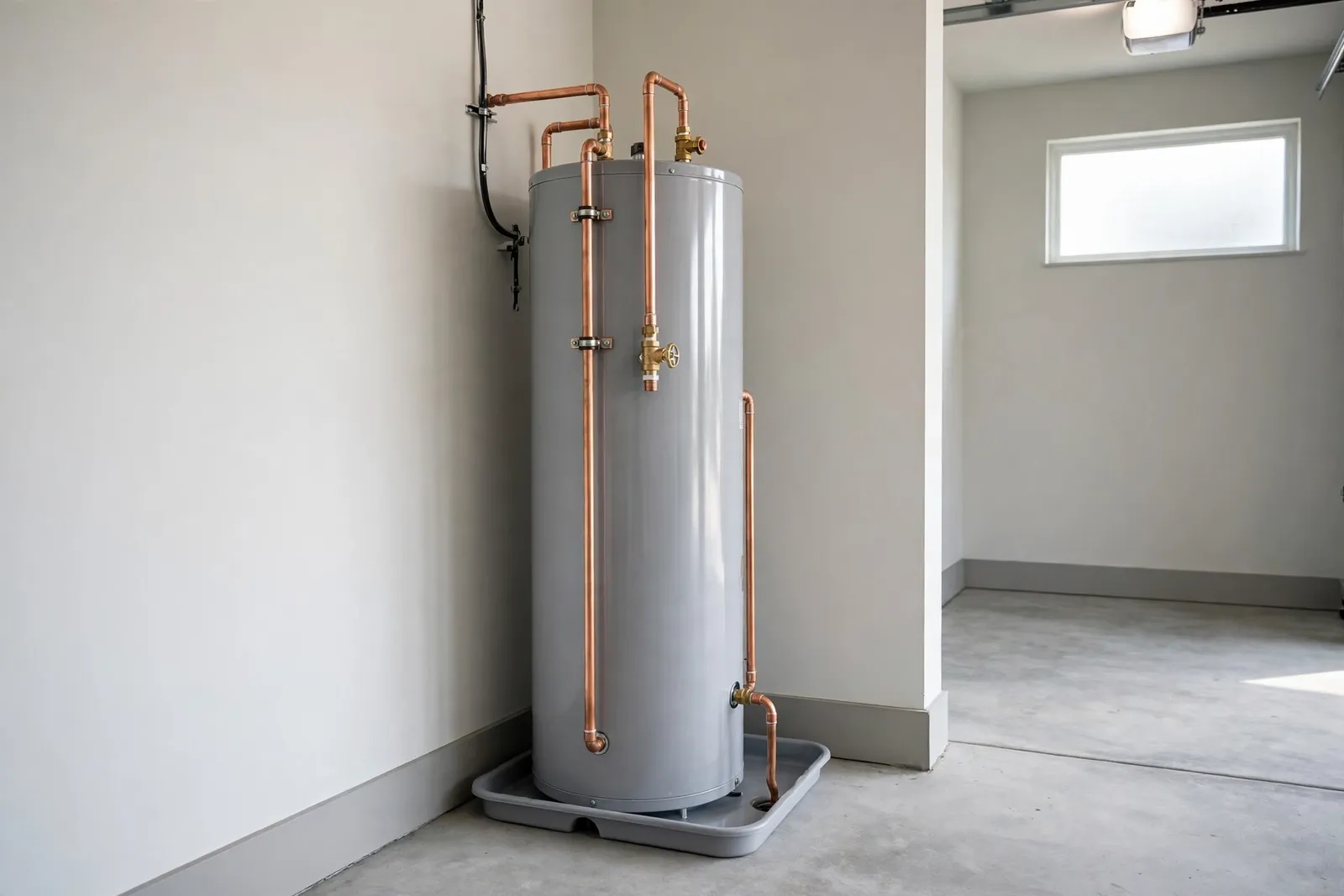
The new tank sets on a drain pan anywhere a leak would reach finished space. Supply connectors and the shutoff valve are replaced as a matter of course, since reusing ten-year-old flex lines on a new tank is how a new installation gets an old leak. An expansion tank goes in where the home's system needs one. Then the tank fills, the air purges, and the crew verifies the two things that matter before leaving: the venting draws correctly on a gas unit, and the water at the tap reaches temperature and holds.
Recent Project: Water Heater Repair in Dorchester
BEFOREAFTER
A Dorchester homeowner reported showers going lukewarm halfway through while the kitchen tap still ran properly hot. Testing showed the lower element on the nine-year-old electric tank had failed and the upper element was carrying the whole load, with heavy sediment at the base slowing recovery further. The crew drained the tank, replaced both elements and the thermostat set, flushed the sediment out, and checked an anode rod that still had working life in it, so the tank itself stayed.
Turnaround
One visit, about two hours on site.
Final Price
$615
Water Heater Installation and Repair Cost in Waldorf, MD
No plumbing company serving Waldorf publishes local pricing, so every figure here is a published national range from Angi 2026 cost guides, labeled as exactly that. Plan with these, then use the quote form for the range on your actual tank.
Water heater installation runs $800 to $2,000 nationally for a standard tank replacement. Water heater repair runs $150 to $750 nationally, covering elements, thermostats, igniters, anode rods, and pressure relief valve work. Tankless units, for homes weighing the conversion, run $1,200 to $3,500 in published guides, with the spread driven by gas line capacity and venting changes.
What moves the figure: capacity, fuel, and access. Stepping from a 40 to a 50 gallon tank adds modest cost. Converting between gas and electric adds real cost and is usually a separate project decision. A tank in an open garage swaps faster than one in a finished closet. And the small parts around the job, the pan, the expansion tank, the new connectors and valve, belong in any honest installed figure, because leaving them out is how a low quote grows on install day.
Getting More Years Out of the Tank You Have
Southern Maryland water carries enough mineral content to fill a tank bottom with sediment a layer at a time, and sediment is the quiet driver behind most early tank deaths. It insulates the water from the heat source, so the unit fires longer, the steel at the base runs hotter than it was built for, and the tank wears from the inside while looking fine from the outside.
Two habits fight it. A drain-and-flush every year or so clears the loose sediment before it bakes into scale. And the anode rod, a sacrificial metal rod inside the tank that corrodes so the tank wall does not, is worth checking from about year five onward; a spent rod replaced in time is one of the cheapest life-extenders in the whole plumbing system. Neither habit makes a tank immortal. Both move the replacement from a flooded surprise to a planned decision, which is the outcome we aim for on every water heater visit.
How much does it cost to replace a water heater in Waldorf, MD?
Published national ranges from Angi 2026 put a standard tank installation at $800 to $2,000, and repairs at $150 to $750 when the tank is sound. No Waldorf company publishes local pricing, so treat those as planning figures and send the quote form for the range on your unit.
Is my water heater worth repairing?
If the tank body is dry, the water runs clear, and the unit is under about ten years old, a failed element, thermostat, or valve is usually a sensible repair. Rust at the base seam, weeping from the tank itself, or rusty water that never clears means the money belongs in a replacement instead.
How long does a water heater replacement take?
A standard tank swap takes about half a day, including draining the old unit, setting the new one on a pan with fresh connectors, and verifying temperature and venting before the crew leaves. A tankless conversion takes longer because gas capacity and venting both change.
Why does my hot water run out faster than it used to?
Usually sediment or a failing element. Sediment steals tank volume and insulates the water from the heat, and a dead lower element on an electric unit leaves only the top of the tank properly hot. Both are diagnosable in one visit, and both are repairable on a sound tank.
What size water heater does my home need?
Most Waldorf homes run well on 40 or 50 gallons. The right size follows the bathroom count and how the household actually uses hot water: back-to-back morning showers and a soaking tub argue for the larger tank, while a smaller household rarely misses the extra capacity.
How does the quote form work for a water heater problem?
The form asks for your name, phone number, the service, and a short message. Tell us the symptom, the tank's age if you know it, and whether there is any water on the floor. We respond with the published range for repair or replacement and the questions that narrow it down.
Get Your Plumbing Quote
Tell us what is leaking, clogged, or running cold. We read every request that comes in and respond with the published national range for that kind of work and the next step, starting with a visit to confirm the diagnosis on site.
Prefer to talk it through first? Send the form and we will call you back at the number you give us.