Waldorf, Maryland
Leak Detection and Pipe Repair in Waldorf, MD
Leak Detection and Pipe Repair in Waldorf, Maryland, with the published national price range up front, the problem confirmed on site, and a written figure before any work begins.
Waldorf, Maryland
Leak Detection and Pipe Repair in Waldorf, Maryland, with the published national price range up front, the problem confirmed on site, and a written figure before any work begins.
A leak you can see under a sink is an errand. A leak you cannot see is a meter quietly spinning, a water bill climbing month over month, and moisture working on framing and flooring all the while. Most hidden leaks in Waldorf homes sit inside a wall, under a floor, or in a crawl space, dripping for weeks before anything stains. Waldorf Plumbing Company traces hidden leaks with testing and listening equipment, opens only the section that must open, and repairs the pipe.
Supply lines are the usual suspects: a pinhole worn into copper, a fitting that weeps at a joint, a line chafed where it passes through a stud. Homes built in the 1970s and 1980s across Waldorf carry copper thinned with age, and pinholes arrive in clusters once they start. Crawl spaces hide the second group: a dripping fitting soaks the ground below and never stains anything inside. The third group hides in plain sight: a toilet valve or fixture supply running a trickle constantly, easy to miss and steady enough to move a bill.
The first test is the meter: with every fixture off, a moving dial confirms water is going somewhere it should not. From there we isolate by zone, closing valves to narrow the leak to one branch at a time. Pressure testing shows which runs hold and which bleed down. Listening equipment then picks up the sound of escaping water at the failure. That sequence lets us open one small section instead of cutting exploratory holes across a room.
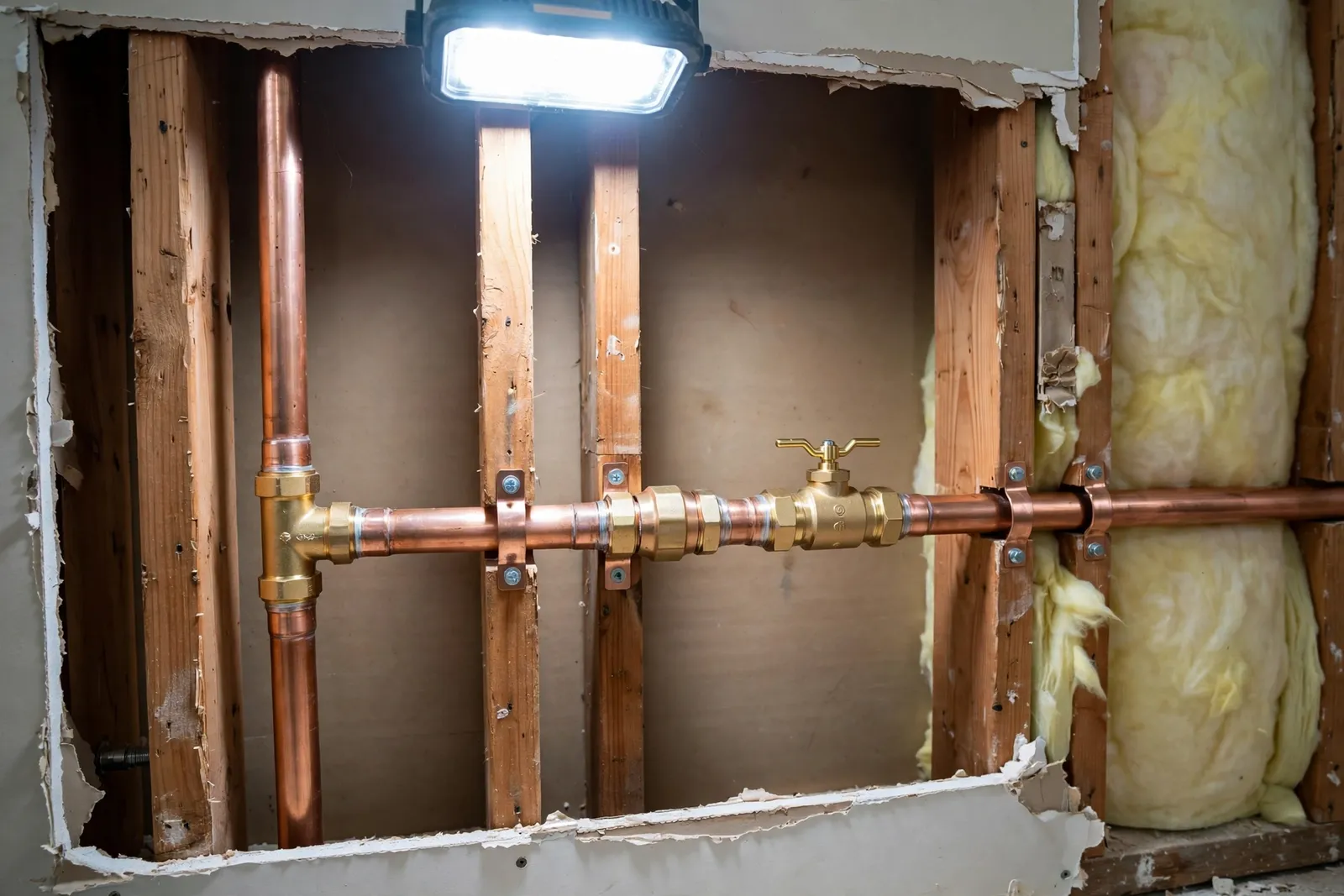
A Carrington homeowner watched the bill nearly double across two cycles with no visible leak in the house. The meter test confirmed water moving with everything shut off, and listening equipment traced it to a pinhole in a copper line inside a bathroom wall. The crew opened one small section, cut out the failed run, and soldered in new copper before pressure testing the branch.
Published ranges for the larger leak jobs sit at $600 to $4,500 nationally for main line leak repair and $1,000 to $4,000 for burst pipe repair, from Angi 2026 guides. A located interior leak is a smaller job than either: no digging, and the repair is usually one section of pipe. What moves the price is access, how much wall or floor opens and closes, and how much pipe the failure damaged. The figure for your leak is stated before repair work begins.
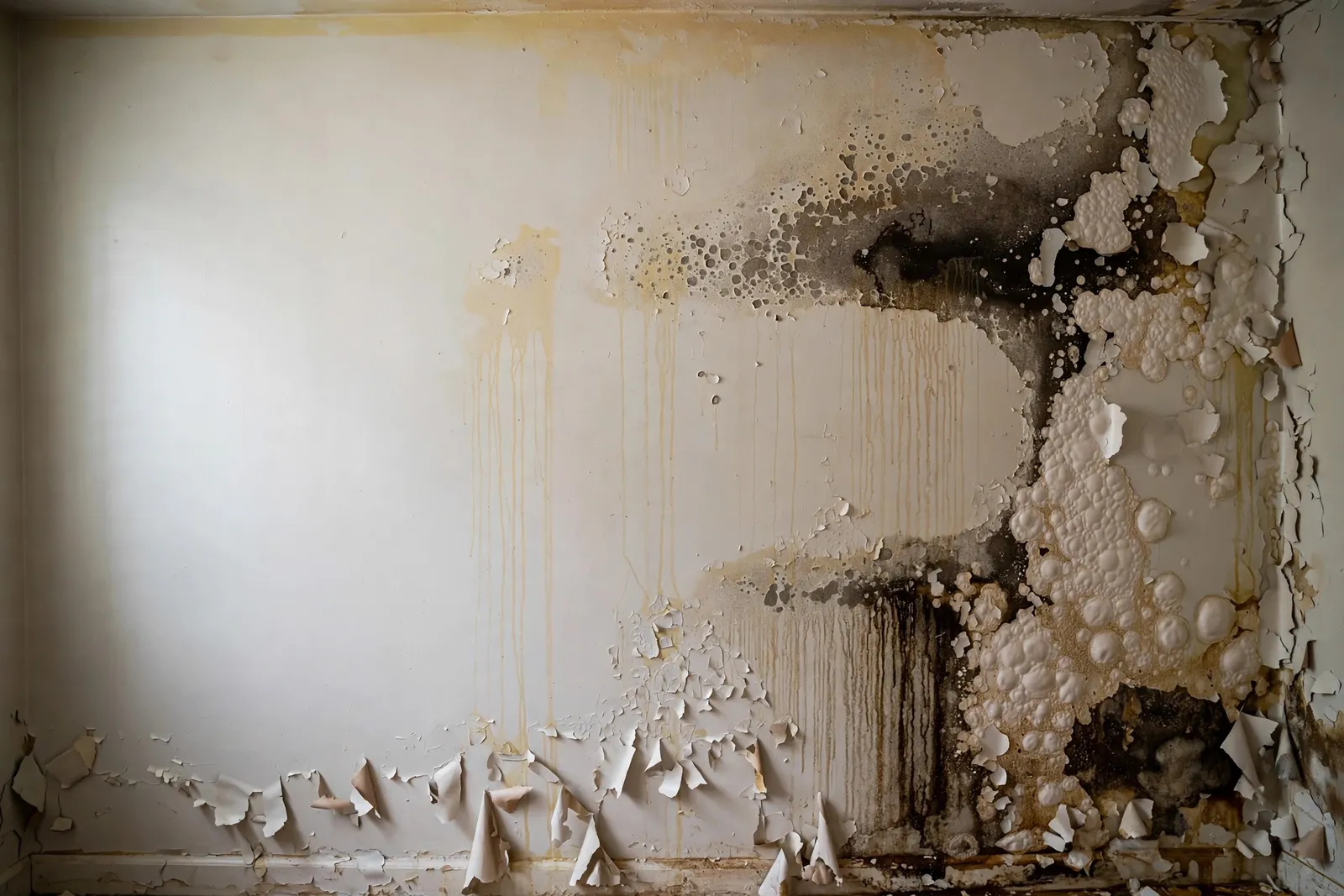
A pinhole drips a modest amount of water, but it drips into a wall cavity or onto a subfloor around the clock. Drywall softens, flooring cups, and framing stays damp enough to invite rot, while visible damage stays near zero until the day it is not. The pipe repair is the small number in this story. Catching the leak while it is still one section of pipe is the entire value of finding it early.
The classic signs are a bill climbing with no change in use, a meter moving when every fixture is off, water sounds in a quiet house, and a damp spot on a floor or wall. Any one of them is worth a meter test.
No. Detection comes first: meter testing, zone isolation, pressure testing, and listening equipment narrow the leak to a short section. We open one small area at the failure point, not a trail of holes across the room.
Most are located in a single visit of a few hours. The meter test takes minutes, isolating the branch takes longer, and the repair follows in the same visit when the section is accessible.
Published national ranges put main line water leak repair at $600 to $4,500 and burst pipe repair at $1,000 to $4,000. A located interior leak is typically a smaller job than those ranges describe. Your figure is stated before repair begins, once the leak is found and its access known.
Yes. A pinhole or weeping fitting runs around the clock, and a steady small flow adds up to thousands of gallons a cycle. One hidden leak explains most doubled bills.
The same process applies: isolation and listening equipment trace lines under floors and out to the yard. Yard leaks mean digging at the located point rather than along the whole run, which is why locating first matters. Describe them in the quote form and we will start there.
Tell us what is leaking, clogged, or running cold. We read every request that comes in and respond with the published national range for that kind of work and the next step, starting with a visit to confirm the diagnosis on site.
Prefer to talk it through first? Send the form and we will call you back at the number you give us.