Waldorf, Maryland
Sewer Camera Inspection in Waldorf, MD
Sewer Camera Inspection in Waldorf, Maryland, with the published national price range up front, the problem confirmed on site, and a written figure before any work begins.
Waldorf, Maryland
Sewer Camera Inspection in Waldorf, Maryland, with the published national price range up front, the problem confirmed on site, and a written figure before any work begins.
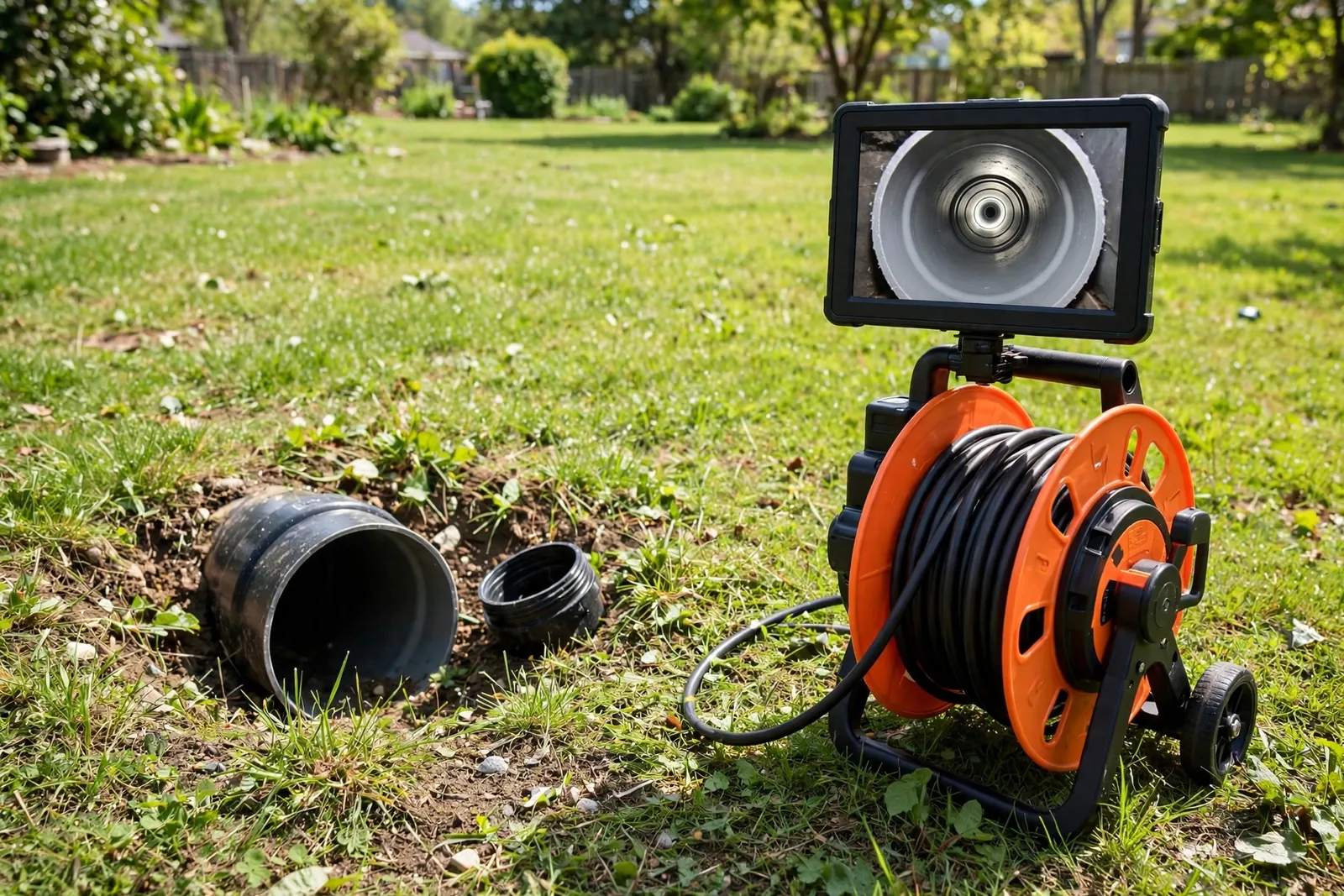
The third time a main line backs up in a year, clearing it again is not a plan, it is a subscription. A sewer camera inspection ends the guessing: a waterproof camera on a flexible rod travels the inside of your sewer lateral while a monitor shows the pipe from within. We run camera inspections across Waldorf on lines that clog on a schedule, on laterals in 1970s houses never looked at, and on lines about to get a repair quote, so repairs target the real failure.
A sewer camera separates problems that look identical from the kitchen sink. Root masses show as pale fingers pushing through a joint, and the camera shows which joint and how much of the opening they have claimed. Bellies, where a settled pipe holds standing water and collects everything flowing through it, show as a stretch where the camera travels underwater. Offsets appear as a visible step at a joint; cracks, corrosion, and grease walls all read clearly on the monitor. Just as useful is what it rules out: a sound, grease coated line needs clearing, not a dig.
The camera enters through a cleanout, usually at the basement, yard, or foundation wall. A footage counter tracks the camera's distance, so a problem can be tied to a location in the run. A transmitter in the camera head lets the crew locate its position from the surface and mark the ground directly over the failure, along with its depth. That mark makes a later repair a targeted dig instead of an open trench. You can watch the feed while it happens.
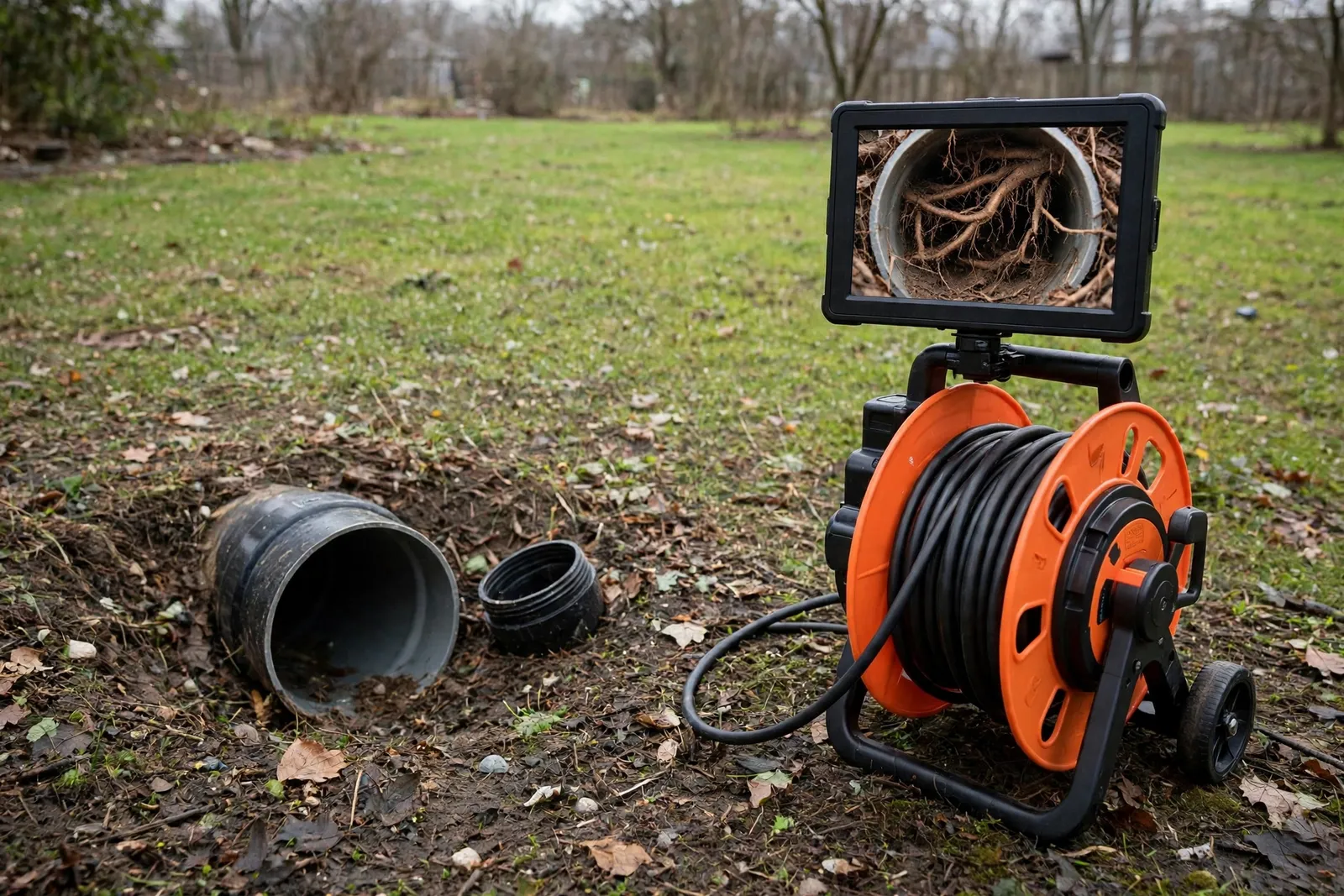
A Dorchester home had its kitchen and main line cleared twice in fourteen months, the backup always returning to the lowest fixtures first. The camera went in through the basement cleanout and found two problems: a root mass working through a joint about forty feet out, and a shallow belly past it that held water and grease between uses. The crew marked the joint and depth on the lawn, so the homeowner could plan a spot repair with the dig mapped.
Every figure here is a published national range from Angi 2026, because no Waldorf plumbing company publishes local pricing today. A camera inspection is framed from the closest published anchor, drain clearing, which runs $95 to $500 nationally. An inspection alone, or added to a clearing visit, is planned inside that same published range.
What moves the figure is access and condition. An easy cleanout and a passable line sit low; a line that must be cleared first, or a buried cleanout to locate, pushes the visit up. Either way, the inspection keeps a repair quote honest: a located spot repair is a fraction of a full line replacement.
Repeat blockages on a schedule are the clearest signal. A clog that returns to the same fixtures in the same season is the pipe describing itself: roots through a joint, a belly collecting solids, an offset catching paper. Whole house slowness, gurgling toilets, and wet or green patches over the lateral point the same way. An inspection also belongs before any sewer repair, and before buying an older home with a clay or cast iron lateral.
Published national figures from Angi 2026 put drain clearing at $95 to $500, and a camera inspection is planned from that same range. A line that must be cleared first moves the figure within it.
Yes. The camera head carries a transmitter the crew locates from the surface while it sits at the failure. The spot and depth get marked on the ground, turning a repair into one targeted opening instead of a trench dug on a guess.
Most homeowners do, and we encourage it. The monitor sits at the cleanout, and roots, bellies, offsets, and cracks are plain to see. Deciding about a problem you have seen yourself is a different conversation.
Usually, yes. One slow sink is a fixture or branch line issue. Slowness at fixtures across the house, especially the lowest ones, points at the main line or the lateral.
The camera is built for main lines and laterals, typically three inch pipe and up, entered through a cleanout. Branch lines under sinks and tubs are too tight for it and are diagnosed by clearing and testing instead.
You get the location, depth, and a clear description of what the camera showed, then repair options priced from published ranges: a spot repair, a section replacement, or a full replacement.
Tell us what is leaking, clogged, or running cold. We read every request that comes in and respond with the published national range for that kind of work and the next step, starting with a visit to confirm the diagnosis on site.
Prefer to talk it through first? Send the form and we will call you back at the number you give us.