Waldorf, Maryland
Gas Line Repair and Installation in Waldorf, MD
Gas Line Repair and Installation in Waldorf, Maryland, with the published national price range up front, the problem confirmed on site, and a written figure before any work begins.
Waldorf, Maryland
Gas Line Repair and Installation in Waldorf, Maryland, with the published national price range up front, the problem confirmed on site, and a written figure before any work begins.
Gas line work starts with a rule that outranks every schedule and every quote: if you smell gas in your home right now, treat it as a utility call, not a plumbing call. Leave the house, and from outside or a neighbor's phone, call your gas utility's emergency line. The utility finds and stops the leak first. Once the utility has cleared the scene, Waldorf Plumbing Company handles what comes second: repairing the failed fitting or run, installing new lines for appliances and generators, and pressure testing every line before it goes back into service.
The rotten egg smell added to natural gas is a warning, and it asks for a specific order of actions. Do not flip light switches, do not light anything, and do not go hunting for the leak. Get everyone out of the house, then call the utility from outside. The utility crew will shut gas off at the meter if needed and tell you when the home is safe to re-enter. Only after that clearance does a plumbing call make sense, because repair work starts from a stopped, cleared line, not a live one.
Most of our gas work is planned rather than urgent. New runs feed the appliances Waldorf homeowners keep adding: a gas range replacing an electric one, a dryer, a fireplace insert, a tankless water heater with its bigger draw, and standby generators, which need a dedicated run sized for the load. We also repair the failures that show up on existing lines, most often at threaded fittings loosened by years of vibration and at flex connectors aged past their prime. Every run ends the same way: capped, pressurized, and tested before it carries gas.
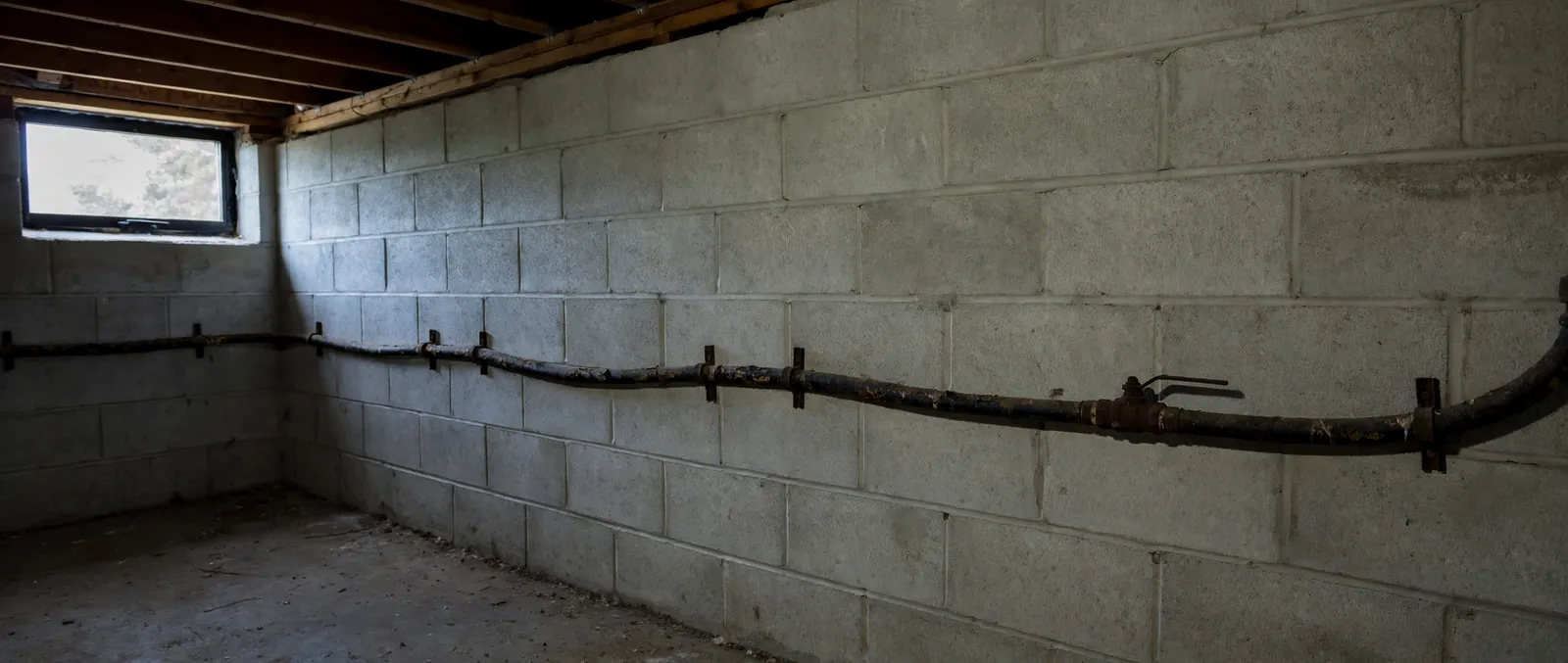
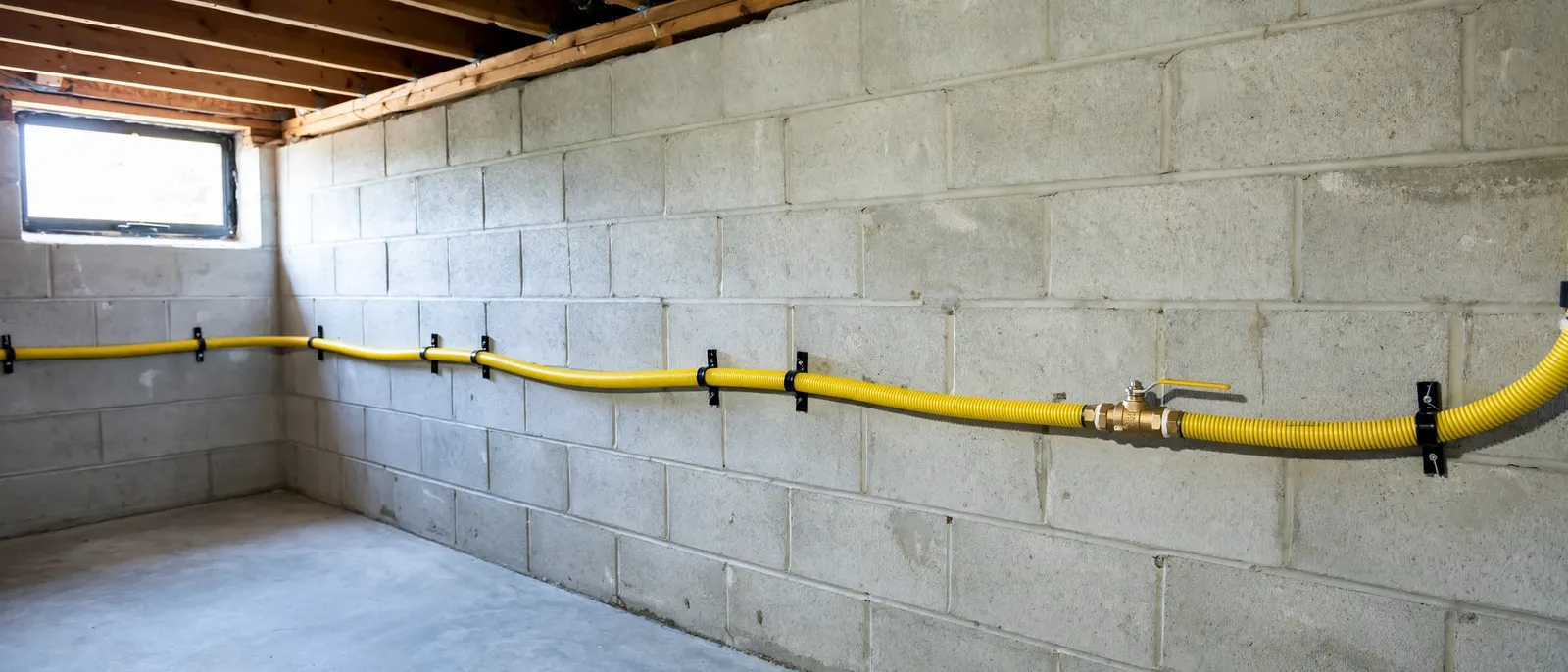
A Pinefield homeowner switching from an electric range to gas had no gas run near the kitchen. The crew routed a new line from the existing main through the basement joists, brought it up behind the range, and fitted a shutoff valve and flex connector. The run held a pressure test before the range was connected and fired for the first time.
Published guides, drawn from Angi 2026 figures, put gas line repair at $250 to $750 nationally for the typical fitting, flex connector, or short run failure. New appliance runs price by length and access: a short run across an open basement costs less than a long one fished through finished ceilings. Generator runs sit at the larger end because pipe sizing and length both grow. The quote form gets you the figure for your run.
A gas line is not finished when the last fitting tightens. It is finished when it holds pressure. We isolate the run, pressurize it with air, and watch the gauge: a line that holds its reading has no leaks at any joint, fitting, or connector. Only after the gauge holds do we connect the appliance. It is a plain, unglamorous test, and it is the step that separates installed from proven.
Leave the house first, then call your gas utility's emergency line from outside. The utility stops the leak and clears the scene. Call a plumber second, for the repair, once the utility has said the home is safe to re-enter.
Yes. New appliance runs are the most common gas work we do. We route the line from the main, fit a shutoff valve at the appliance, and pressure test the run before connecting it.
Yes. A generator needs a dedicated run sized for its full-load fuel draw, larger than most appliance lines. Tell us the generator's size in the quote form and we will plan the run and give you the figure first.
We pressurize the isolated line with air and watch the gauge. If the reading holds, every joint and fitting on the run is sealed. If it falls, there is a leak to find and fix before the line carries gas. No line goes into service without holding.
Published ranges put gas line repair at $250 to $750 for the typical fitting, connector, or short run failure. Longer repairs and new runs price by length and access. Your figure is stated before work begins, once we know the run.
Most single appliance runs finish in about half a day, routing, fittings, and pressure test included. Longer runs across finished space take more time. Either way, the line is holding before the appliance connects.
Tell us what is leaking, clogged, or running cold. We read every request that comes in and respond with the published national range for that kind of work and the next step, starting with a visit to confirm the diagnosis on site.
Prefer to talk it through first? Send the form and we will call you back at the number you give us.