Sump Pump and Sewage Ejector Services in Waldorf, MD
Sump Pump and Sewage Ejector Services in Waldorf, Maryland, with the published national price range up front, the problem confirmed on site, and a written figure before any work begins.
Sump Pump and Sewage Ejector Services in Waldorf, MD by Waldorf Plumbing Company
In Waldorf, the water table sits close enough to the surface that a basement floor is never far from groundwater pressing under it. That is why so many Charles County basements have a sump pit. It is the machine between a heavy storm and a flooded finished floor. Waldorf Plumbing Company installs and replaces sump pumps and battery backups, and services the ejector pumps serving basement bathrooms in Waldorf.
Two Different Pumps Doing Two Different Jobs
The two pumps get confused because both sit in pits, but they handle different water. A sump pump moves groundwater collected in a pit, pushed out a discharge line before it can rise through the floor. An ejector pump has the harder job: a basement bathroom below the main drain cannot flow uphill, so it grinds and lifts wastewater from its sealed pit to the main line. A failed sump pump floods a floor. A failed ejector takes a bathroom out of service and backs up the worst kind of water.
What We Install and Replace
Primary pumps are the core of the work: sizing the unit to the pit and its inflow, setting float levels, and fitting a check valve so discharged water cannot run back. Battery backups are the second layer, a separate pump that runs when power fails, which tends to happen in the very storms that fill pits fastest. For ejector systems we replace failed pumps, reseal pits, and service valves. We also test quiet pumps, because one idle for a year may not run when asked.
Recent Project: Sump Pump and Sewage Ejector Services in Wakefield
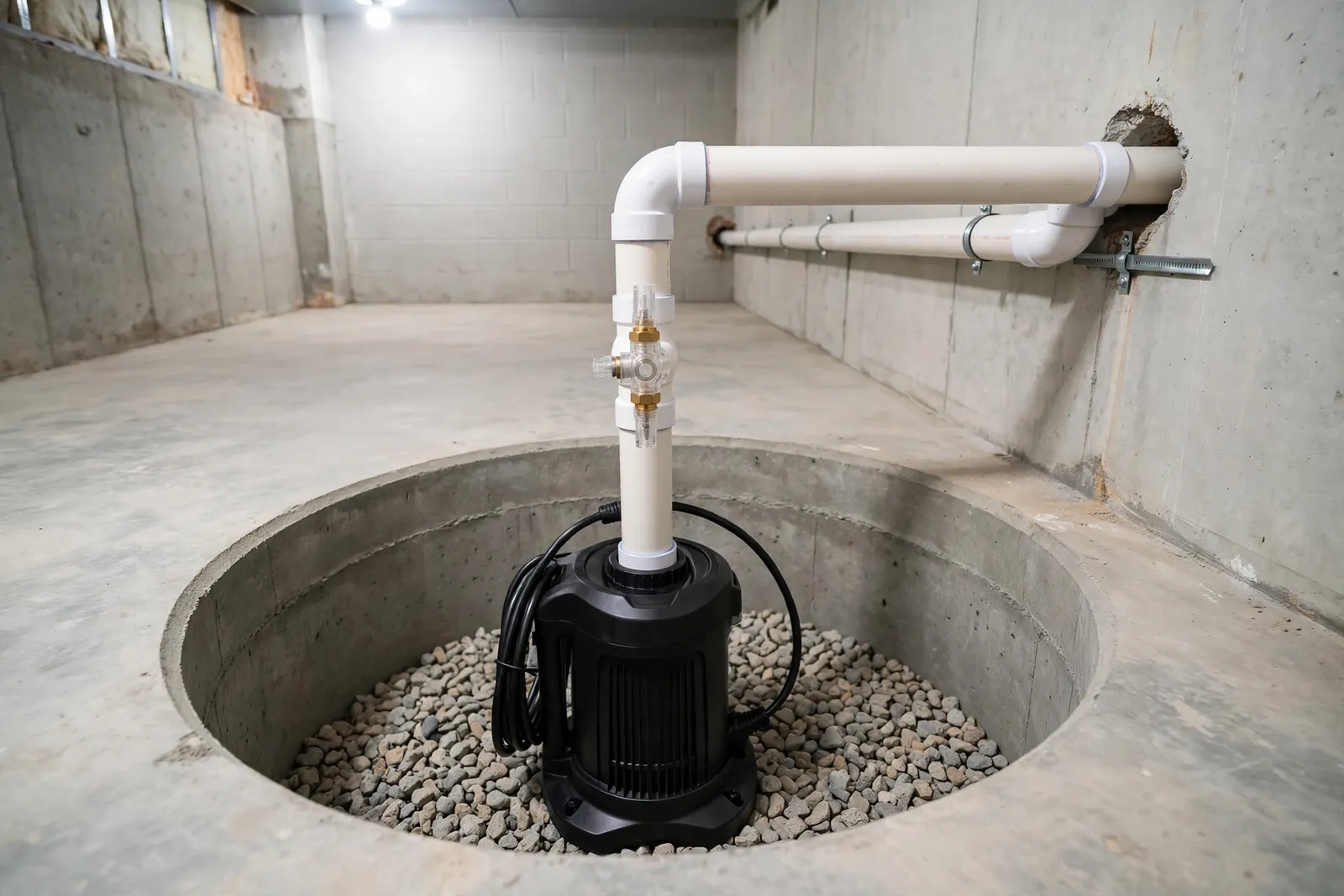
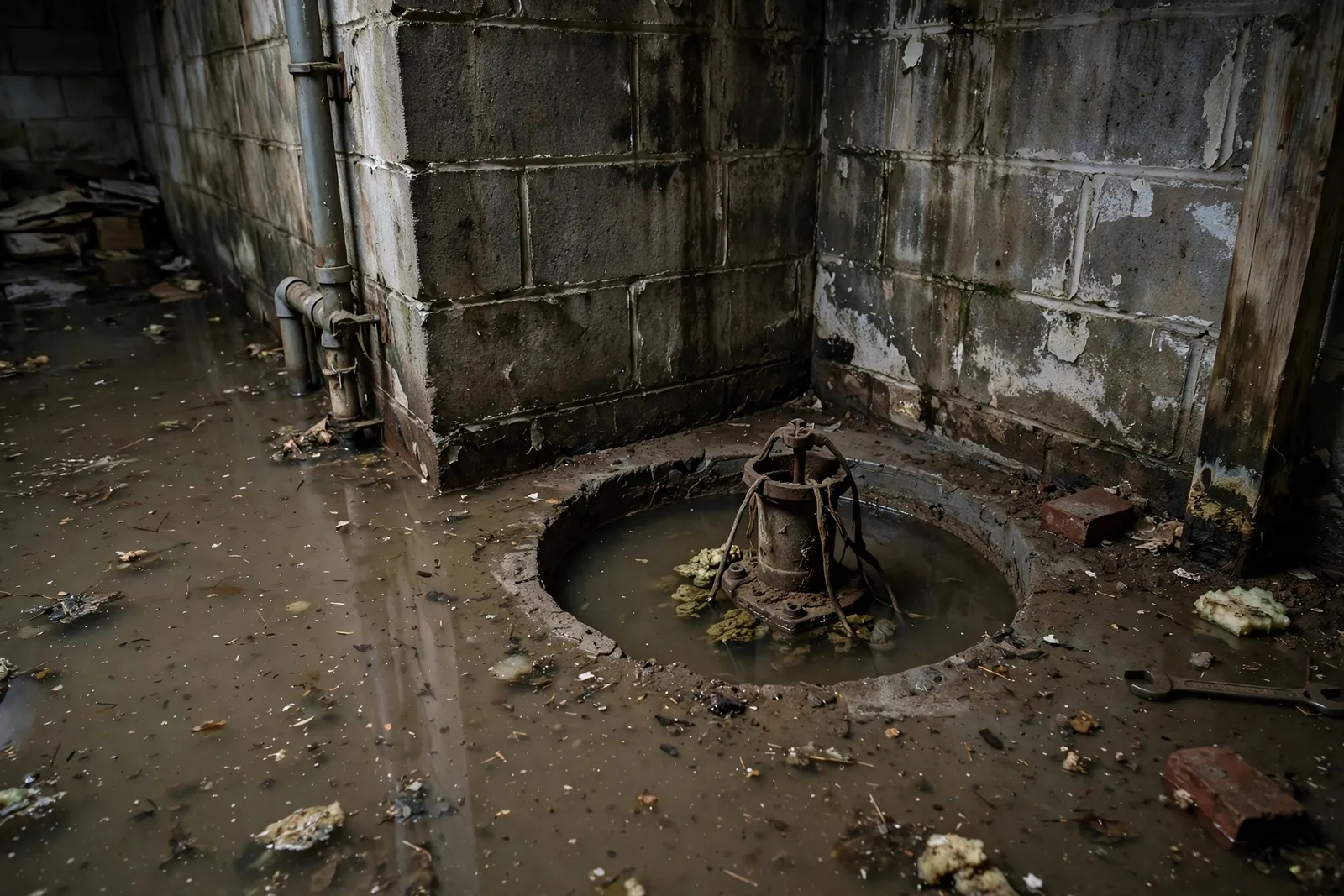
BEFOREAFTER
A Wakefield finished basement took water across one corner during heavy rain after the float switch failed and the pit overflowed in silence. The crew replaced the pump, fitted a check valve, and added a battery backup so the pit drains through an outage. The homeowner tested the float by hand before the crew left and watched the pit empty.
Turnaround
About two hours on site, pit tested and draining before the crew left.
Final Price
$765
Sump Pump and Sewage Ejector Services Cost in Waldorf, MD
Published guides, drawn from Angi 2026 figures, put sump pump repair at $300 to $1,000 nationally. A straightforward replacement lands inside that range, and a battery backup moves a job within it depending on battery size and routing. Ejector work prices by pump and pit: access, pit condition, and whether valves and seals need replacing too. What moves the price most is whether the job is one pump or a pump plus its parts. The quote form gets you the figure for your pit.
The Storm Test Every Waldorf Basement Should Pass
A sump pump fails silently: it sits for months, and the first sign of a dead float switch or seized motor is water on the floor during the storm that needed it. The test takes two minutes: pour water in until the pump kicks on and watch it empty the pit and shut off. Twice a year is enough: before the spring rains and the fall season. A pump that hesitates, hums without pumping, or will not shut off has told you its plans for the next storm.
Pour water in until the float lifts. The pump should empty the pit and shut off alone. If it hums without moving water, runs constantly, or never starts, it needs service before the next heavy rain, not during it.
Is a battery backup sump pump worth it?
In Waldorf, usually yes. The storms that fill a pit fastest also knock out power, and a primary pump without power is just a pit. A backup keeps draining through the outage, the difference between a dry floor and a flooded one.
What is the difference between a sump pump and a sewage ejector pump?
A sump pump moves groundwater from a pit to outside. An ejector pump lifts wastewater from a basement bathroom sitting below the main drain line. Different water, different pump, very different consequences when each fails.
How much does sump pump replacement cost?
Published national ranges put sump pump repair at $300 to $1,000, and a replacement lands inside that band, with backup and discharge work moving the figure. Your price is stated before work begins.
Why does my sump pump run constantly?
A pump that never rests usually means heavy inflow, a float set too low or stuck, or a failed check valve letting water run back in, so the pump clears the same water twice. Two of the three causes are quick fixes.
How often should a sump pump be replaced?
Pumps wear on their own schedule, driven by how often they run, and wet lots cycle them far more than dry ones. Testing twice a year catches the decline early. A pump that has slowed, grown loud, or started hesitating at the float has given its notice; replacing it on a calm day beats replacing it in a storm.
Get Your Plumbing Quote
Tell us what is leaking, clogged, or running cold. We read every request that comes in and respond with the published national range for that kind of work and the next step, starting with a visit to confirm the diagnosis on site.
Prefer to talk it through first? Send the form and we will call you back at the number you give us.